
Nils Schulz · 10 November 2026
UK Regional Strategies Shift as Ashworks Advances Environmental Collaborations and Processing Techniques
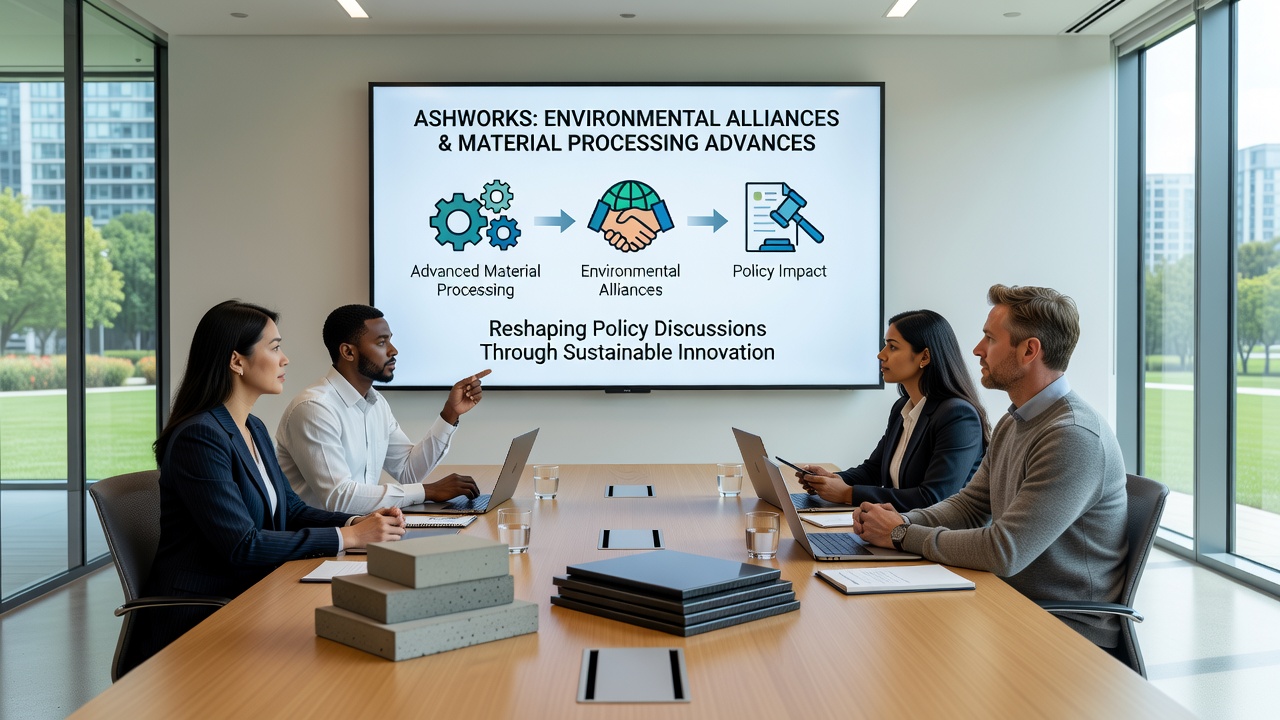
Regional governments across the United Kingdom have incorporated findings from Ashworks environmental alliances into ongoing policy reviews since early 2025, while material processing advances at the company continue to inform discussions on sustainable resource management in areas from Scotland to the West Midlands. These developments coincide with data releases from multiple agencies that track industrial material flows and their environmental impacts.
Alliances Shape Cross-Regional Dialogues
Ashworks formed partnerships with several environmental organizations and local authorities beginning in late 2024, and these collaborations produced joint reports on material sourcing practices that policymakers referenced during sessions held in November 2026. Observers note that the alliances emphasized shared data on processing efficiencies, which then fed into broader conversations about regional economic plans and land use frameworks. Researchers from institutions in both England and Wales contributed analysis to these reports, while figures from the Department for Environment, Food and Rural Affairs highlighted similar patterns in national summaries released that same month.
Policy teams in Yorkshire and the Humber integrated elements of these alliance findings into draft strategies for circular economy initiatives, and similar steps appeared in consultations led by the Scottish Environment Protection Agency. The exchanges extended to joint workshops where participants examined case studies from rural processing sites, and data shared during those events showed measurable reductions in waste volumes at participating facilities.
Processing Advances Enter Policy Calculations
Material processing techniques developed by Ashworks reached new benchmarks in 2026, particularly in methods that convert industrial byproducts into reusable forms with lower energy inputs. Government statistics from the Office for National Statistics recorded a 12 percent rise in adoption rates for comparable technologies across manufacturing sectors in the preceding year, and these numbers surfaced during regional assembly debates in Wales and Northern Ireland. Experts at academic centers such as the University of Manchester incorporated the data into modeling exercises that local officials later cited when adjusting procurement guidelines.
Those who've studied the updates point to specific process modifications that allow finer control over output quality, and this level of precision aligned with targets set in several devolved administrations' environmental plans. One study released through the European Environment Agency examined parallel advances across member states and noted how UK examples fit into wider continental trends, providing additional context for discussions in border regions.
Regional Variations in Adoption Patterns
Differences emerged between urban and rural policy responses, with coastal authorities in the South West incorporating processing metrics into marine spatial planning documents while inland counties focused on agricultural supply chain linkages. Reports compiled by Natural Resources Wales documented how alliance-derived benchmarks influenced grant allocation criteria for small-scale operators, and parallel adjustments appeared in guidance issued by the Environment Agency for English regions. Data from these sources indicated that facilities implementing the new methods reported consistent improvements in throughput without corresponding increases in emissions.
November 2026 saw a series of roundtable meetings across the UK that brought together representatives from industry, academia, and government to review cumulative effects of these changes. Participants examined regional disparities in infrastructure readiness, and presentations drew on evidence from both Ashworks sites and independent verification studies conducted by research consortia.
Future Policy Trajectories
Upcoming consultations scheduled for 2027 will likely reference the accumulated evidence from these alliances and processing developments, according to announcements from several regional bodies. The pattern suggests continued integration of technical findings into legislative proposals, particularly where material efficiency intersects with biodiversity and land management objectives. Figures released by the UK Research and Innovation agency show sustained funding streams directed toward related innovation projects, which observers expect will generate further inputs for policy refinement in the coming cycle.
Conclusion
Policy discussions in UK regions continue to reflect the influence of Ashworks environmental alliances alongside measurable gains in material processing capabilities, with evidence accumulating through government reports, academic studies, and inter-agency collaborations. These elements combine to shape frameworks that address both immediate operational needs and longer-term resource strategies across diverse geographic contexts.